Expanding Collaboration with National Institute of Technology (KOSEN) - Tsuruoka College, Japan: Long-Term Internships and Job Opportunities for SCLS Engineering Students at Japanese Enterprises
Trường Hóa và Khoa học sự sốnghttps://scls.hust.edu.vn/uploads/scls/logo-dhbk-1-02_130_191.png
Friday - 29/05/2026 11:11
On 28/5, the School of Chemistry and Life Sciences (SCLS) at Hanoi University of Science and Technology (HUST) officially hosted a distinguished Academic Collaboration Meeting and Memorandum of Understanding (MoU) Signing Ceremony with the delegation from the National Institute of Technology (KOSEN), Tsuruoka College, Japan.
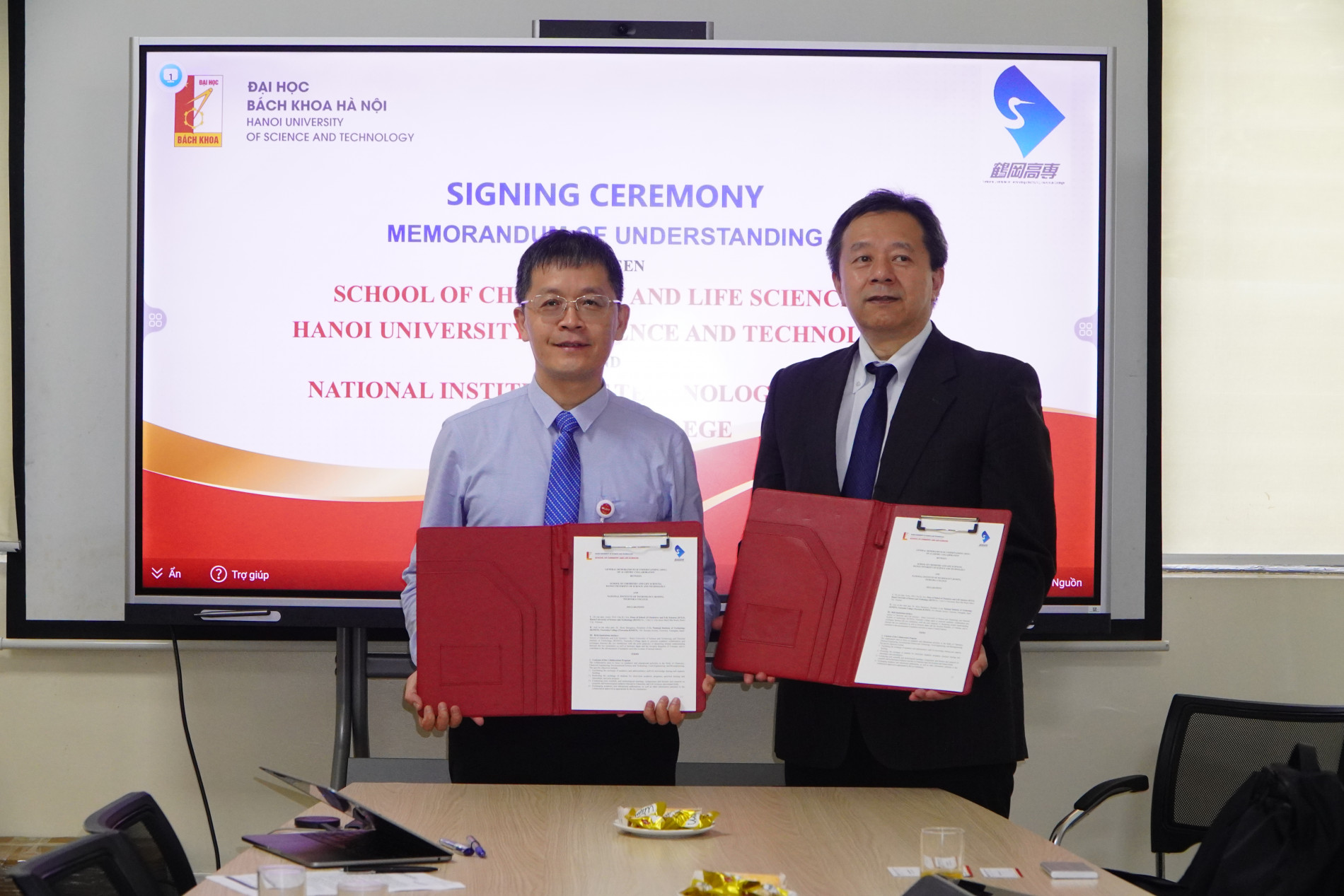
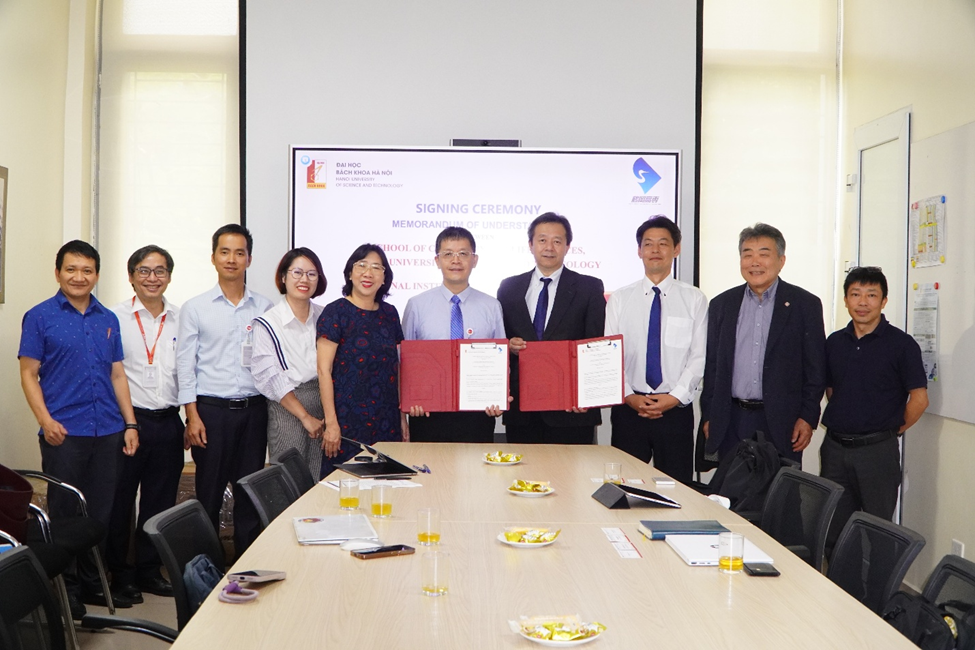
Representatives of both parties took a photo with the signed memorandum.
This milestone event opens up dynamic strategic pathways for advancing educational quality, promoting international research, and particularly fostering global integration and competitive advantages for students through long-term advanced engineering internships at Japanese enterprises.
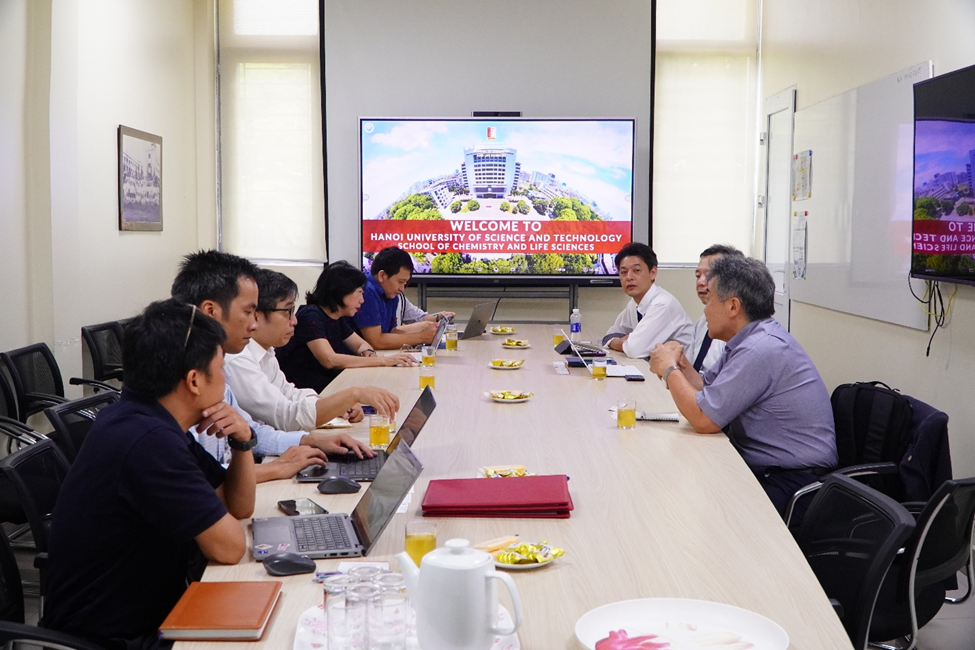
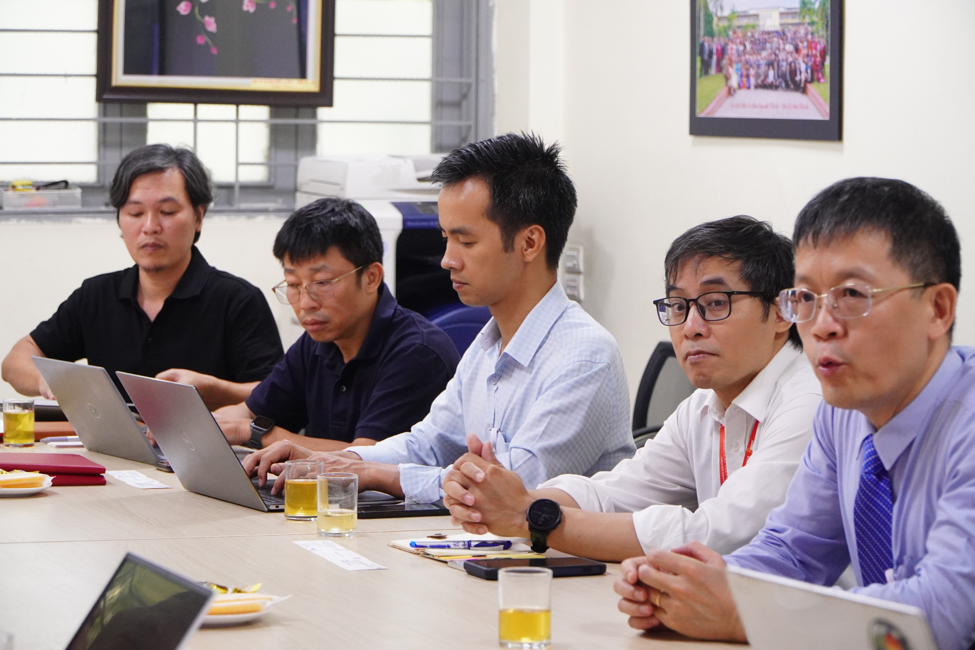
Representatives of both sides attended the meeting.
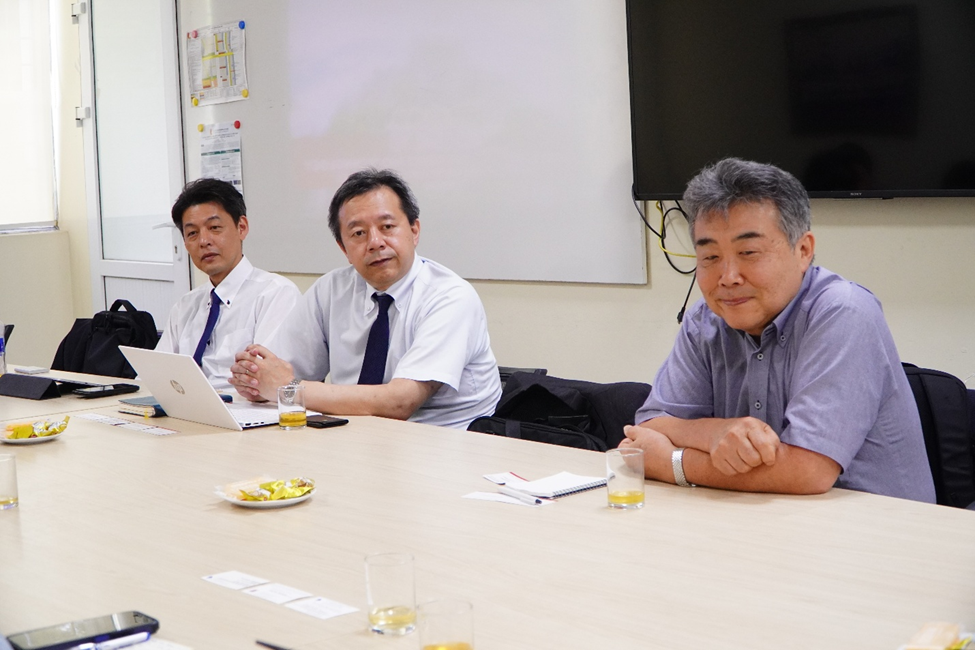
The School was highly honored to welcome the prominent leaders and scientists from the Tsuruoka College delegation, including: Prof. Takaomi Kobayashi – Professor in Material Science; Prof. Tsukasa Sato – Professor in Chemistry and Biology Course (Biomass Polymers field); and Assoc. Prof. Shigeharu Ito – Professor in Chemistry and Biology Course (Catalytic Chemistry field).
1. Prof. Takaomi Kobayashi, 2. Specially Appointed Professor, Prof. Tsukasa Sato, 3. Assoc. Prof. Shigeharu Ito. (From right sight)
On behalf of the School of Chemistry and Life Sciences (SCLS) – HUST, the hosting committee comprised: Assoc. Prof. Chu Ky Son – Dean of SCLS; Assoc. Prof. Hoang Thi Thu Huong – Head of the Dept. of Environmental Science and Technology; Dr. Nguyen Dang Binh Thanh – Deputy Head of the Dept. of Chemical Engineering; Dr. Pham Ngoc Hung – Head of the School Administration Office; Dr. Dinh Quang Hung – Deputy Head of the School Administration Office; Assoc. Prof. Phan Huy Hoang – Leader of the Pulping and Packaging Technology Research Group; Dr. Cao Hong Ha – Lecturer of the Dept. of Chemical Engineering; and Dr. Nguyen Thi Thu Huong – Assistant for Partnership and Engagement.
Delegations of SCLS.
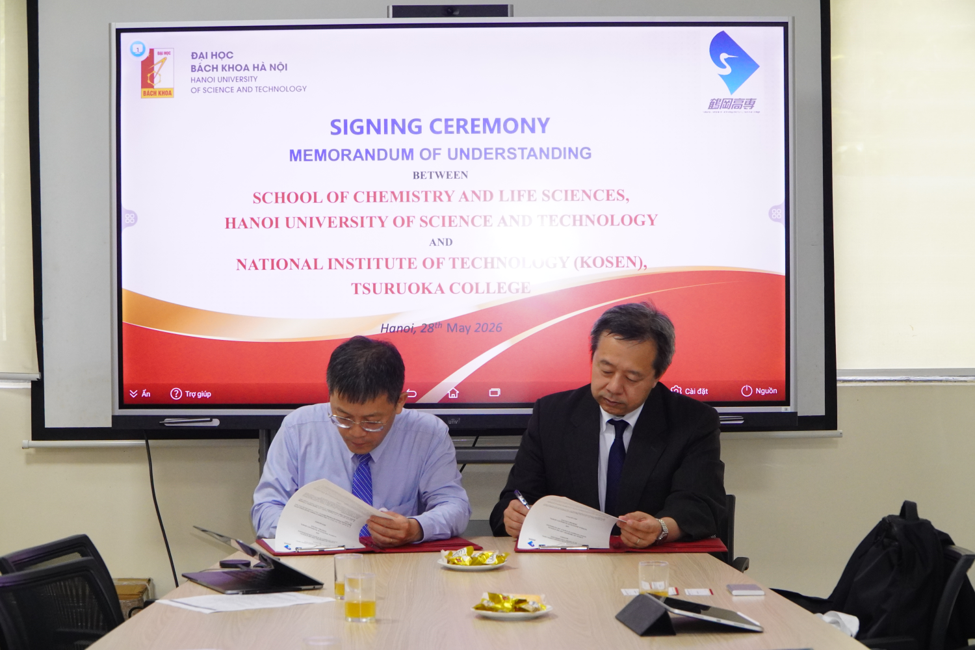
The focal point of the event was the Official MoU Signing Ceremony between the two institutions. This agreement establishes a comprehensive framework for future collaboration, focusing on student and staff exchange programs, joint research projects, and academic publications.
Representatives of both parties conducted the signing ceremony.
Following the ceremony, both sides held intensive, in-depth discussions to implement advanced engineering internship solutions and bolster recruitment prospects for SCLS-HUST students at major corporations in Japan as well as Japanese FDI enterprises in Vietnam. The three core collaborative agendas successfully achieved high consensus include:
Accepting SCLS-HUST students for structured 4-to-6-month intensive company internships directly at premier companies and enterprises in Japan.
Accepting SCLS-HUST students specializing in the biomass materials field for dedicated 4-to-6-month professional internships, providing hands-on access to advanced green production lines.
Promoting two-way academic exchanges by welcoming research-stay students from Tsuruoka College (Japan) to study, complete internships, and engage in cultural exchange within the modern laboratories of the School of Chemistry and Life Sciences.
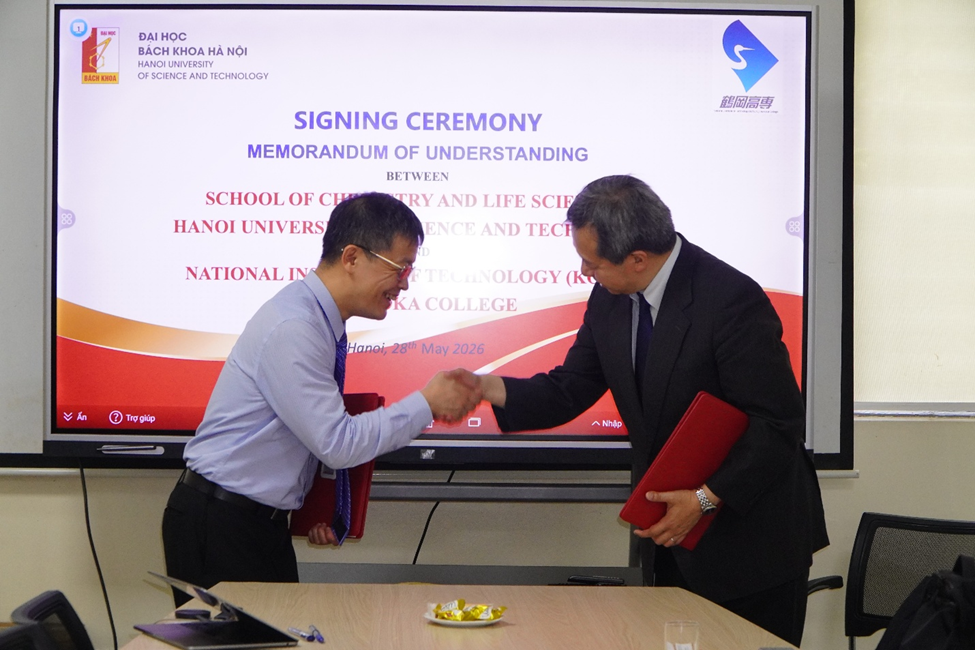
Representatives of both parties shook hands after the signing ceremony.
The event concluded with an engaging and lively interactive session between professors from NIT, Tsuruoka College, and SCLS undergraduate and Master’s students. The success of this MoU signing ceremony strongly reaffirms the leading international standing of the School of Chemistry and Life Sciences, continuously delivering strategic and global career launchpads for its learners.
Representatives of both parties took a commemorative photo at the end of the program.